
EC requests SCCS for scientific opinion on the safety of Cyclamen Aldehyde

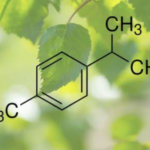
 Cyclamen Aldehyde (CAS No. 103-95-7; EC No. 203-161-7) is a fragrance ingredient widely used in cosmetic products, such as perfumes and fragranced formulations, as  well as in other consumer products including air care products, polishes and wax blends, where it imparts a fresh, floral “cyclamen-like” odour.
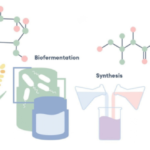
More specifically, Cyclamen Aldehyde is a synthetic fragrance ingredient produced via crossedaldol condensation of cuminaldehyde and propionaldehyde followed by catalytic hydrogenation. It has been used in fragranced consumer products such as soaps, detergents, lotions and perfumes since the 1920s. The substance is listed in the CosIng database under the INCI name Cyclamen Aldehyde with a perfuming function. It was granted ‘Generally Recognized as Safe’ status by the Flavour and Extract Manufacturers Association (FEMA) in 1965 and is authorised for use as a flavouring substance in the United States. The Council of Europe (1970) also included cyclamen aldehyde in its list of admissible artificial flavouring substances at a level of 1 ppm. It is currently not subject to specific restrictions under Regulation (EC) No 1223/2009.
The European Risk Assessment Committee (RAC) of ECHA issued in October 2025 an opinion recommending among others a classification for Cyclamen Aldehyde as ‘Reprotoxic of Category 1B (H360Fd)’1. Following the RAC opinion, the European Commission may propose a classification for Cyclamen Aldehyde as a ‘Repr.1B’ (CLP Regulation Annex VI entry).

More information: https://health.ec.europa.eu/document/download/d789c4aa-ac32-47f2-ba62-2df1b9f3558d_en?filename=sccs2022_q_050.pdf

3
Show Comments (0) Hide Comments (0)
0 0 votes
Article Rating
Subscribe
Notify of
guest
0 Comments
Oldest
Newest Most Voted
Inline Feedbacks
View all comments
0
Would love your thoughts, please comment.x
()
x