The term of antioxidant is often heard in relation to skin aging, along with free radicals and oxidative stress. In this article, you will learn about some key concepts in understanding antioxidants and how they work, as well as how free radicals and oxidative stress are related to skin aging and how oxidative processes affect the stability of cosmetic products, and finally, examples of antioxidant compounds for use in formulations will be introduced.
Antioxidants and Skin
The skin is a living organ in which many biological processes occur, such as cellular respiration, etc. Some natural reactions produce free radicals that have at least one unpaired electron. Because of these unpaired electrons, free radicals are very unstable and reactive.
To become more stable, they must pair their single electrons. They do this by taking this electron. This process is called an oxidative reaction. The problem is that the loss of an electron leads to the creation of a new free radical, thus starting a chain reaction.

The most important free radicals in our body are reactive oxygen species (ROS). They usually interact with lipids, proteins and DNA and can cause cell damage, although some oxidative reactions caused by free radicals are beneficial to our organism, such as helping to regulate the cell division cycle.
Our body can manage the damage caused by these reactions with an antioxidant system. Antioxidants are molecules that fight and neutralize free radicals, stopping the oxidative chain reaction before they damage vital compounds. They protect cells from oxidative damage and reduce its effects.
Internal factors such as inflammation and external factors such as exposure to pollution, cigarette smoke and UV light can increase the production of ROS and other free radicals. When this exceeds the body’s antioxidant capacity, something called oxidative stress occurs. Also, with age, ROS production increases, while antioxidant production decreases, leading to a progressive imbalance. The deterioration caused by oxidative stress affects the skin’s environment in several ways, including reducing collagen and elastin production and accelerating the skin’s aging process.
Antioxidants to prevent early signs of aging
As the body’s outermost protective layer, the skin is constantly exposed to external factors, mainly UV rays and air pollutants. Oxidative stress then accelerates the aging process, causing wrinkles, hyperpigmentation, dryness and loss of skin tone. Using cosmetics containing antioxidant active ingredients helps to neutralize the formation of free radicals and thus slow down the visible signs of aging.
Some of the antioxidants used in cosmetics are naturally present in our skin, for example, compounds such as vitamin E, vitamin C and coenzyme Q10. Their topical application helps to strengthen our natural antioxidant protection.
The skin can also benefit from using cosmetic products containing plant extracts, which are good sources of natural antioxidant compounds, to delay aging. Plants produce these substances to protect themselves from the sun and other oxidizing agents. Natural antioxidants include polyphenols, flavonoids, carotenoids and terpenes, etc.
Herbal Antioxidants for Skin Care
Green Tea
Green tea extracts and EGCG reduce ROS levels in the skin, reducing and even reversing the effects of photoaging and UV damage
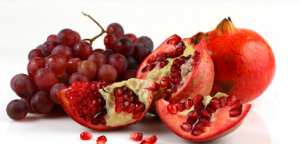
Grapes
Grape seeds contain proanthocyanidins, which are powerful free radical scavengers. They exhibit greater antioxidant activity than vitamins C and E and can even help regenerate these vitamins and provide synergistic antioxidant activity when combined with them.
Rosemary
Rosemary leaves are a source of various antioxidant substances. Most of this activity comes from carnosol and carnosic acid, but ursolic, rosmarinic, and caffeic acids also contribute to these properties and act as free radical scavengers.
Pine Tree
Maritime pine bark extract (Pinus pinaster), also known commercially as Pycnogenol, contains phenolic compounds such as proanthocyanidins, which are significant antioxidants and regenerate and protect vitamins C and E from oxidation. This extract can help slow the appearance of signs of aging and even reduce hyperpigmentation.
Pomegranate
Pomegranate fruit and peel are rich in ellagic acid, a polyphenolic compound that increases the activity of antioxidant enzymes in our skin. Pomegranate extract also helps reduce hyperpigmentation and protects the skin from UV damage.
Antioxidants and Cosmetic Formulations
In addition to skin components, some cosmetic ingredients are also susceptible to oxidation caused by heat, light, metal ions, and exposure to oxygen. One of the main reasons for reduced shelf life in cosmetics is the oxidation of unsaturated vegetable oils.
Oxidation or rancidity can cause discoloration, unpleasant odors, and even physical instability of the product. The higher the unsaturated content of an oil, the more sensitive it is to heat and oxidation, and the shorter its shelf life.
Cosmetic formulations must be stored in appropriate conditions to prevent oxidation and rancidity. It is important to consider the optimal cosmetic packaging required when formulating any cosmetic product that contains ingredients susceptible to oxidation. Options such as amber or Myron glass can help protect against light exposure, and airless pump bottles reduce exposure to air. The use of antioxidants such as vitamin E (tocopherol), rosemary extract, carotenoids, and chelating agents, etc., in the formulation is still the main approach to prevent oxidation of cosmetic products.