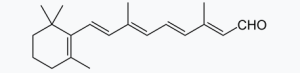
Retinal (also known as retinaldehyde) is a polyene chromophore. Retinal, bound to proteins called opsins, is the chemical basis of visual phototransduction, the light-detection stage of visual perception (vision).
Retinal, is an effective derivative of vitamin A and a potent ingredient in skincare. It is a precursor to retinoic acid and is converted into it in the body. Retinal is known for its ability to accelerate cell renewal and stimulate collagen production, making it an effective agent against skin aging.
Retinal penetrates deeply into the skin and combats the signs of aging. It reduces fine lines and wrinkles, improves skin texture, and promotes a more even skin tone. Additionally, retinal is effective in treating acne as it helps to minimize pores, contributing to clearer and purer skin. It also has antioxidant properties that protect the skin from harmful environmental factors.
Retinal can work faster than traditional retinol, which makes it a good pick for mature skin types.
Since retinal is less irritating to the skin than retinol, it can also be used by individuals with sensitive skin. The retinal serum should be applied in the evening, as it can make the skin more sensitive to light.
Retinal is typically in premium, science-based skincare lines emphasizing low irritation and high efficacy.