The skin protects the body’s internal organs as the first line of defense against various environmental damage. Physical, chemical, biological, and environmental stresses and internal factors can lead to aging, sagging, wrinkles, dryness, and coarse skin texture.
In recent years, the beauty industry has moved significantly towards sustainability, embracing natural ingredients and product packaging. Aquatic biotechnology, which focuses on the use of marine organisms for various applications, has recently emerged as a promising, sustainable, and effective source of cosmetic ingredients.

One of the most important benefits of aquatic biotechnology is that it provides a sustainable source of ingredients that are beneficial to the skin and the environment. With increasing consumer concern about the environmental impact of the beauty industry, companies are now looking for ways to reduce their carbon footprint and use sustainable raw materials.
Aquatic biotechnology offers a sustainable way to harness the benefits of ocean ingredients, helping the beauty industry avoid overfishing and unnecessary ocean farming. Marine organisms can be harvested sustainably without harming the environment or jeopardizing future resources, making them an ideal option for cosmetics.
Aquatic biotechnology also opens up new opportunities for the development of new cosmetic ingredients.
Marine organisms produce a wide range of unique bioactive compounds, including peptides, enzymes, and polysaccharides, which have been shown to have various beneficial effects on the skin. A good example is seaweed extract, which has antioxidant and anti-inflammatory properties and effectively reduces signs of aging and protects the skin from environmental damage.
In addition to their unique properties, marine-derived compounds also have high bioavailability, meaning that the skin absorbs them easily. This makes them very effective in delivering nutrients to the skin and improving its health and appearance. The high bioavailability of these ingredients also means that they can be used in lower concentrations, reducing the overall environmental impact of the product.
Many cosmetic companies have already started incorporating marine-derived ingredients into their products, and the trend is only expected to grow. For example, some companies have started using a proprietary fermentation process to extract the maximum benefit from seaweed, resulting in highly effective products that improve the texture and appearance of the skin. While other companies have started to specialize in marine-derived ingredients, using a wide range of marine organisms, including algae and seaweed, in their products, formulated to address a variety of skin concerns, from hydration to anti-aging. Despite the significant environmental and dermatological benefits, further advances in aquatic biotechnology have been stalled by difficult and very costly sampling methods. Therefore, for significant advances in aquatic biotechnology, government involvement is required, not only to fund exploration and innovative sampling and cultivation methods, but also to address territorial disputes related to the sea.
The cosmetic industry uses a wide range of seaweeds (seaweed) and microalgae for their hydrating, anti-aging, and protective properties. They are valued for their high concentration of antioxidants, vitamins, and minerals.
Important compounds extracted from various algae include:
- Alginates and agar: natural thickeners and emulsifiers.
- Fucoidans: carbohydrates known for their anti-inflammatory, skin-lightening, and collagen-protecting properties.
- Astaxanthin: a very potent antioxidant often extracted from microalgae that protects against oxidative stress and photoaging.
The primary types of algae and seaweed used in cosmetics are:
- Brown Algae (Coarse Algae)

Brown seaweeds are the most commonly used in skin care formulations. They are known for their water-binding and UV-protective properties.
- Kelp (Laminaria digitata): Deep moisturizer. Often used in anti-aging serums and masks.
- Bladderwrack (Fucus vesiculosus): Rich in antioxidants and fucoidan, it is valuable for increasing skin firmness and elasticity.
- Rockweed (Ascophyllum nodosum): Helps smooth wrinkles and creates a protective, smoothing gel on the skin.
- Wakame (Undaria pinnatifida): A source of skin-brightening compounds used in toners and anti-aging skin treatments.
- Red Algae (Cromaria)
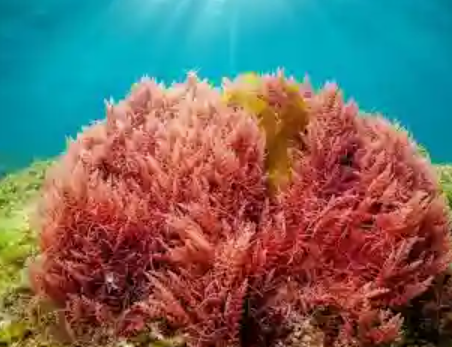
Red algae are highly valued for their soothing and anti-inflammatory properties and are great for sensitive and reactive skin.
- Irish Moss (Chondrus crispus): A source of carrageenan, which is used as a natural gelling and thickening agent.
- Nori (Porphyra): Traditionally used in face masks to brighten the complexion and support skin elasticity.
- Dulse (Palmaria palmata): Rich in trace minerals and amino acids. Often used to create a natural purple hue in makeup.
- Green Algae (Cromaria)
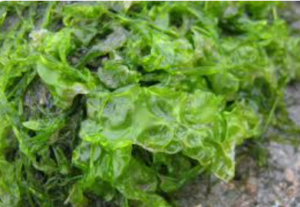
Green algae are generally rich in proteins, vitamins and amino acids.
- Sea Lettuce (Ulva lactuca): A major source of azosin (an amino acid similar to human elastin), which helps improve firmness and reduce fine lines.
- Microalgae (single-celled algae)

Microalgae are cultivated for their potent, concentrated nutrients.
- Spirulina (Arthrospira): A microscopic powerhouse packed with antioxidants, vitamins, and minerals, used primarily for detoxification and intense hydration.
- Chlorella (Chlorella vulgaris): Rich in chlorophyll and amino acids, chlorella adds natural green pigment and supports skin repair.